
How to Build a Gym Habit That Sticks
Build a gym habit around a reliable cue, a manageable workout, and a plan that fits your week. Make the next visit easier to start and repeat.
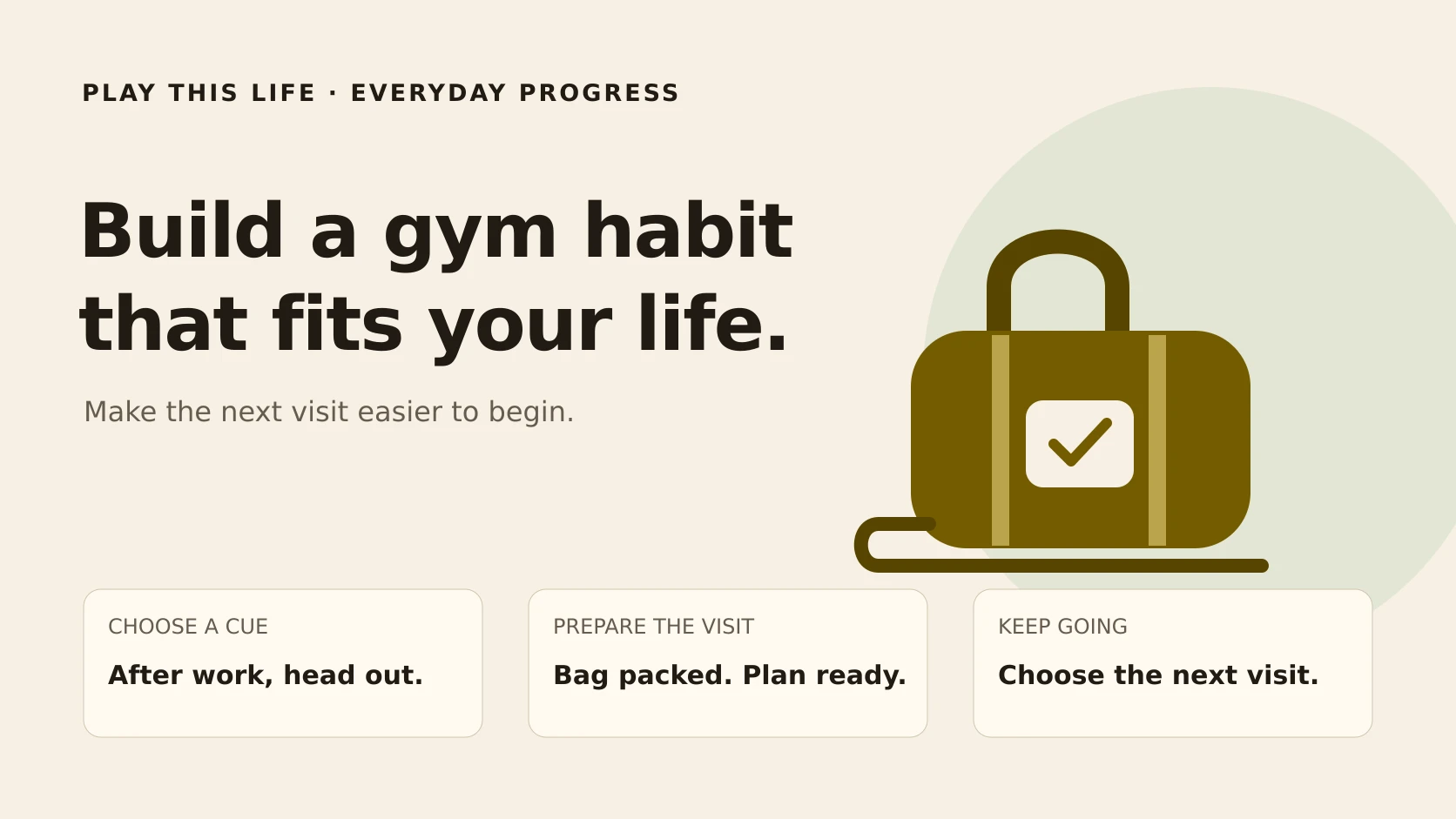
The gym bag is still by the door. You meant to go on Tuesday, but work ran late. Wednesday became the new start. By Friday, you’re considering a bigger reset for Monday.
If that loop sounds familiar, make the next visit easier to begin. Choose when you’ll leave, decide what you’ll do there, and give the session a realistic place among the other things your day requires.
To build a gym habit that sticks, start with a repeatable cue, a manageable session, and a clear next visit. Keep enough of the setup familiar that you can return without rebuilding the plan each time.
Choose a cue you’ll actually encounter
“Go to the gym more” leaves the starting point open. A cue gives you a moment to act: after shutting your laptop, after dropping someone off, or after your first class on a particular day.
Choose something that regularly happens on the days you want to train. Then name the action that follows it. For example:
On Tuesdays and Fridays, when I finish work, I’ll pick up my packed bag and go straight to the gym.
Those days are an example, not a prescription for how often to train. Choose a schedule that fits your training plan and responsibilities. If your shifts change each week, choose your opportunities when you receive the rota.
There’s research behind paying attention to context. In a randomized study of walking habits, people who planned walks in consistent contexts found the action became more automatic. The study did not show that this group kept up its increased walking afterward, so a stable cue is one useful part of the picture. For the gym, try pairing your departure with an event that already belongs to your day.
Decide the session before you arrive
A session becomes harder to start when it contains a string of unresolved decisions: which exercises, which equipment, how much time, and what to do if a machine is busy.
Before the next visit, choose a familiar workout you can follow. Write down its exercises and the sets, reps, or other measurements you want to use. Decide which part you’ll start with.
If you need help learning the exercises or choosing appropriate training, a qualified instructor can help you make that plan. Having a plan you understand gives you something concrete to open when you walk in.
For a busy day, decide in advance what a shorter version would contain. Make it specific enough to follow. “I’ll do whatever I can” leaves the decisions waiting for you at the gym.
Make room for the whole trip
A forty-minute workout may need a much bigger gap once you include travel, changing, a shower, and dinner. Look at the evening around the workout before committing to it.
Suppose you finish work at six, need groceries, and want to spend an hour on a personal project. Decide where the gym fits among those commitments. You might shop the previous day, prepare dinner earlier, or choose another training window.
Then remove a few decisions from the way out:
- Put the clothes, shoes, and other things you need in one place.
- Check that the gym is open during the time you’ve chosen.
- Know how you’ll get there and what comes afterward.
- Keep your workout somewhere you can open quickly.
Choose the preparation that solves your actual sticking point. If you keep going home and settling onto the sofa first, taking your bag to work may be more useful than another reminder.
Give the next visit a place in your plan
After a session, record what you did and check when you intend to return. Keep the next visit visible alongside the rest of your week.
Play This Life brings those pieces together. Your workouts live with your projects, chores, habits, and routines, so you can consider the commitments competing for the same evening. Ginger, Play This Life’s AI assistant, helps you think through the plan and save work you can open and edit.
You could start a conversation like this:
I want to get back to the gym. Help me work out where it fits around my work, travel time, and other commitments. Ask what workouts I want to do before saving anything.
Use the workout view for the session itself: exercises, sets, reps, and weights, with a record of what you actually did. A short preparation routine can hold the steps that get you out of the door. Ask Ginger to adjust the plan as your week changes, or edit it directly.
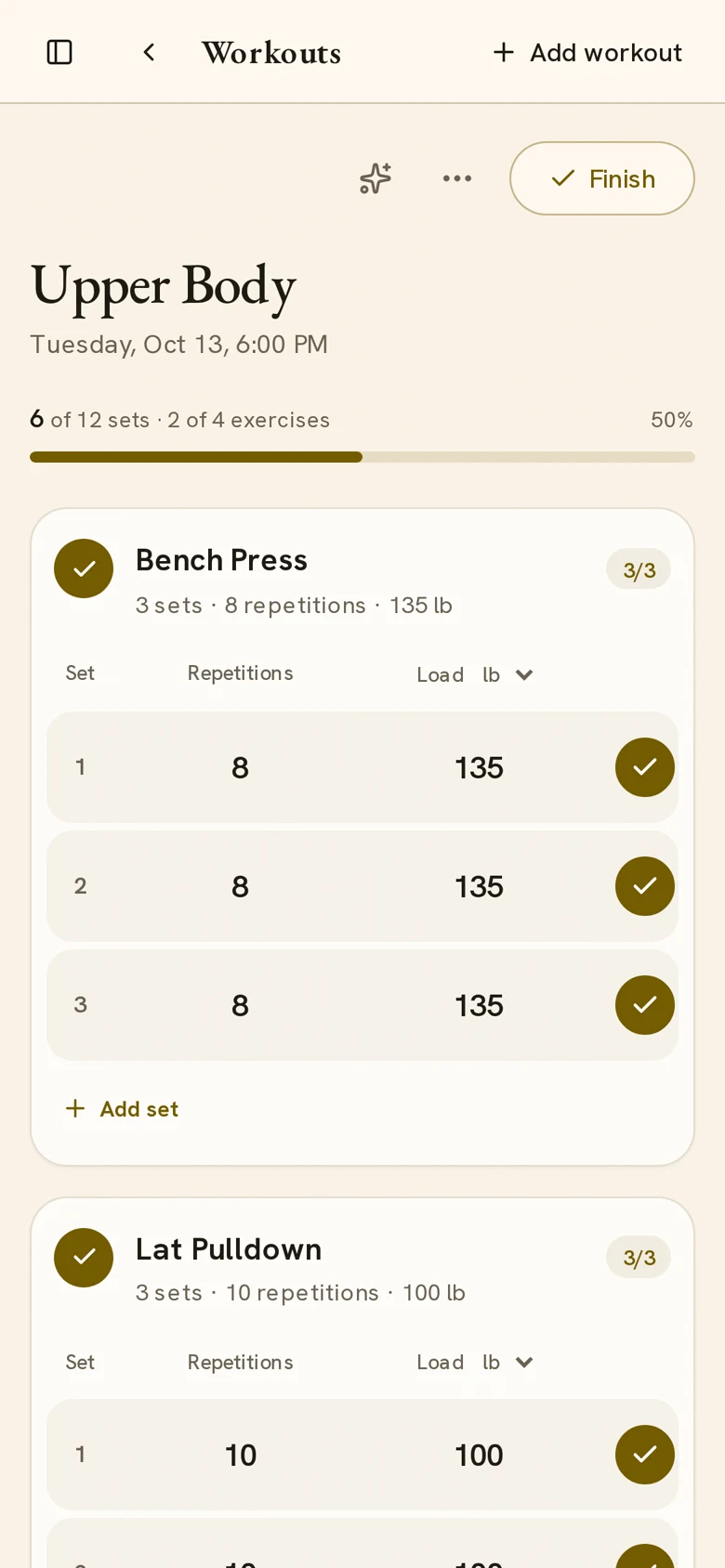
Recorded work also has a home in your wins and personal progress. You can look back at the training you did alongside the rest of your effort. The app helps keep the plan and record together; you choose the next action.
Use a missed visit to improve the setup
If you miss a session, identify what got in the way. Did work overrun? Was the gym too far away? Were you unsure what to do once you arrived?
Change the part that caused the problem. Move a session that repeatedly clashes with work. Prepare the workout if indecision is keeping you home. Choose the next feasible visit and continue from there.
In Lally and colleagues’ habit-formation study, missing one opportunity did not materially affect the formation process. That finding is a useful reason to return after a gap instead of treating one missed visit as a fresh start from zero.
Questions about building a gym habit
How long does it take to build a gym habit?
There’s substantial variation. Lally and colleagues found that the time it took daily health behaviors to become more automatic varied widely from person to person. That study does not give everyone a gym deadline. Watch whether starting is getting easier, and keep improving the setup you repeat.
How many days should I go at first?
Choose visits that fit your training needs and the time you can reliably make available. For the habit-building part, the useful question is whether you can repeat the plan in an ordinary week. Our Tuesday-and-Friday example shows how to make a departure cue concrete.
What if my schedule changes every week?
Keep a short weekly planning check. When your schedule becomes clear, choose the next visit and prepare for it. A useful cue can be “after my early shift” even when the day changes.
Make the next visit clear
Choose one feasible training window. Decide what you’ll do when you arrive. Prepare the things that usually delay leaving.
You can build from the next visit. Talk it through with Ginger, save a plan that fits your life, and give the work you do a place to accumulate.